Author: admin

  • The Framework ForBuilding Sustainable Advantage

    Building sustainable advantage means gaining a favorable, superior, and beneficial position for an enterprise that will continue over time, either by developing, enhancing, or maintaining the current state, or by changing it. It is an ongoing process from the creation of a vision to the delivery of value. The Framework for Building Sustainable Advantage is a fundamental tool for establishing the mindset and actions required to transform vision into value on an ongoing basis within an environment of change – either by causing it or responding to it.

    “Sustainable” means the ability to continue on an ongoing basis; “advantage” means being better off now or in the future relative to the past, or to other entities. Being advantaged applies both to individuals in their communities, and to enterprises in their marketplaces.

    The sustainable enterprise employs three criteria in all decision making – are the mindset and intended actions responsible:

    • Environmentally?

    • Economically?

    • Socially?

    The sustainable enterprise gains a beneficial position that will continue over time by building advantage:

    • Aspirational – stated values and enacted values are consistent; loyal relationships exist with constituencies

    • Competitive – position and posture that offer constituencies better value than competitors

    • Collaborative – relationships between suppliers, or customers, or peers as a partnership with a common mission, operating dependently for mutual value

    • Cooperative – relationships between suppliers, or customers, or peers as an association with a similar mission, operating independently for mutual value

    Employees, customers, suppliers, and investors participate with an enterprise as primary constituencies because they contribute to the value-creation process. Regulators and competitors participate as secondary constituencies.

    Building sustainable advantage requires:

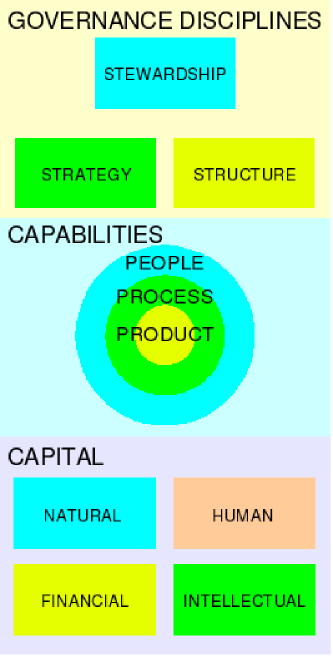
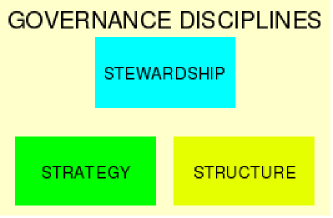
    • Establishing the governance disciplines required to form a vision based upon innovative ideas, to enact change, and to deliver value through…

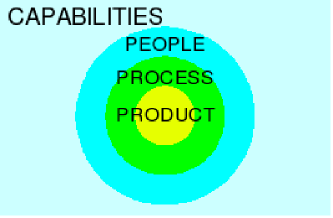
    • …the capabilities of people, processes, and products and/or services to take advantage of opportunities in the marketplace…

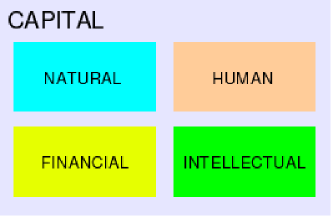
    • …and the effective utilization of natural, human, intellectual, and financial capital resources to provide a strong foundation for all activities

    Governance disciplines…

    Governance disciplines are the attitudes and behaviors required to build sustainable advantage for a vision, including taking responsibility for an enterprise, positioning it, and enabling the necessary relationships that deliver value.

    Governance disciplines include:

    • Stewardship – the responsibility for the performance of an enterprise and the delivery of value to constituencies. Stewardship competencies have three components: enabling, domain, and core. Enabling competencies depend upon the effectiveness of entrepreneurial, leadership, and managerial roles. Domain competencies represent the specific functional knowledge and technical skills required to perform an activity. Core competencies represent activities well done that give the enterprise an advantage.

    • Strategy – the beneficial positioning of an enterprise in marketplaces so as to deliver value over time. Strategic plans are long-term statements of direction – typically three-to-five years or more, with short-term initiatives as necessary from the point of departure to one-to-three years out. Strategic plans decompose into enterprise aspiration and industry position and posture, competitive position and posture, performance improvement, constituency-based, functional, and governance components.

    • Structure – the enabler of relationships between an enterprise’s infrastructure, products and/or services, markets, and constituencies that deliver value. An enterprise’s infrastructure includes processes, functions, facilities, and equipment.

    Capabilities…

    Capabilities represent the capacity and ability of people, processes, and products and/or services to realize potential quality and value. Capacity is a measure of utilization of resources. Ability determines expected quality of performance for activities; potential suggests possible outcomes of activities.

    Capabilities include:

    • People – the constituents of an enterprise: employees who devote careers, customers who are loyal, suppliers who advance credit and quality materials and supplies, and investors who source capital.

    • Processes – the arteries of an enterprise. Every enterprise has a set of processes – groups of activities that take one or more kinds of inputs from which value is delivered to either internal or external customers, or both. The outputs are either end-products or components that are assembled into end-products in downstream processes within the enterprise or in its customers. Processes are the intersection of people and products and/or services. Macro processes cross functions and decompose into micro processes within functions. The highest level macro processes are planning and policy development, deployment, and performance measurement. The deployment process subdivides into research and development, and sales and production.

    • Products and/or services – outputs from processes that are of value. The term “product” is associated with something that is tangible; the term “service” is associated with something intangible – capabilities delivered at the time of sale or shortly thereafter, and/or in support downstream. The term “products and/or services” describes collectively all types of products and services, including “service-oriented” products that are definable, duplicable, and repeatable.

    Capabilities are delivered through functions. Functions are groups of knowledge-related (subject area) activities that have a purpose. Functions house people who deliver value through processes. Functions form the first level of organizational structure within an enterprise.

    Every enterprise has three macro functions: governance, administrative, and operational. The governance function (the board of directors and the chief executive officer of a corporation, the members of a limited liability company, the partners in a partnership, or a sole proprietor) has the ultimate responsibility for the performance of the enterprise to its investors. The administrative functions include: enterprise, legal, finance, human resources, and information technology; the operational functions include research and development, operations, and business development. Operations subdivides into procurement, manufacturing (or equivalent), and distribution; business development subdivides into marketing, sales, and service. The enterprise function provides support activities for planning and policy development, and performance measurement; brand management; facilities management; community, employee, investor, and government relations; and internal audit. The research and development function is “cross-functional” and heavily project-oriented. It represents a set of processes for program management and engineering, and market, product and/or service, and infrastructure-related activities.

    A functional organizational structure is suitable for entrepreneurial and small lifestyle enterprises. As an enterprise grows into multiple markets and product and/or service lines, more complex matrix organizational structures are necessary with business line, geographic, and demographic characteristics. Business lines separate activities such as merchandising, manufacturing (or equivalent), and financial, and enable concepts such as centers of excellence and utilities that support multiple organizational units. Organizational units may be decomposed into divisions, departments, branches, and plants, and also into reporting, responsibility, profit and cost centers.

    Building sustainable advantage from vision to value requires optimizing the capabilities of people, processes, and products and/or services.

    Capital…

    Capital represents the resources used to generate income from economic activity. Capital resources include:

    • Natural – anything related to the environment invested in the enterprise, and is the initial source of all raw materials

    • Human – the characteristics of an individual person in terms of their ability to be economically productive

    • Intellectual – knowledge that provides an advantage and must be protected

    • Financial – money (or monetary equivalents and property) invested in an enterprise in the form of equity and debt

    Enterprises are built on a foundation of natural, human, intellectual, and financial capital, which must be managed effectively and efficiently. Understanding the costs, risks, returns, and rewards associated with each form is essential to building sustainable advantage. Invested capital is employed for both operating and investment purposes. Equity capital represents ownership in an enterprise, and consists of the enterprise’s assets less its liabilities. Assets represent opportunities – what is owned by the enterprise, and what is owed to it. Liabilities represent obligations – what is owed by the enterprise.

    In free markets, production and distribution activities are intended for profit, and the prices that determine gross revenue are ultimately set by supply and demand. Net income results from operating profit – gross revenues (dividends from other enterprises, fees, net interest, sales, rents, and royalties) less costs and expenses, net gains on sales of capital assets, less income taxes where applicable. Net interest revenue comprises gross interest revenue less interest expense. Cash flow represents differences between cash provided and used in operating, financing, and investing activities. On an accrual basis, net income is adjusted by non-cash charges and credits to determine cash flow.

    The return on financial capital creates wealth, which is a source of future capital. There are many measures of return on financial capital based upon earned income before and after interest, taxes, depreciation, and amortization, and based upon invested capital with or without the inclusion of cash and investment assets. Whatever the measure, for an enterprise to be sustainable, the cycle of generating a return on financial capital must repeat indefinitely. In turn, wealth enables investments in natural, human, and intellectual capital.

    Building sustainable advantage…

    Building sustainable advantage is a migration path from an entrepreneurial enterprise as a venture to an intrapreneurial institutional enterprise. Whereas entrepreneurs organize, operate, and assume risk for an enterprise, intrapreneurs foster a culture of change within so as to keep it sustainable over time.

    An entrepreneurial enterprise is not yet fully established as an ongoing concern, may have to rely upon external capital as opposed to bootstrapping to finance future growth, and is either in the emerging or growth stages of development (or decline stage, if it cannot institutionalize).

    An institutional enterprise is established (stable with predictable constituency patterns emerging); is becoming, is, or was an ongoing concern; and is in the growth or maturity stages of development (or decline stage, if it cannot remain as an ongoing concern).

    The stewards of an enterprise include management (the governance function, officers, and non-official managers) and associates (supervisors and staff). Every employee is a steward if they share the values, mission, and vision of the enterprise. Stewards administer the affairs of the enterprise, and protect its assets.

    The stewards of an enterprise must be able to enact change, either by causing it or responding to it, which in turn generates change, and hence adapt to the changed environment accordingly.

    Stewards build sustainable advantage by performing three roles:

    • Entrepreneurial – transforming innovative ideas into value

    • Leadership – setting direction that others will follow to achieve results

    • Managerial – applying resources to activities to achieve results

    Building sustainable advantage from vision to value is an enterpriship (entrepreneurship, leadership, and management) competency.

  • What Disciplines Do Entrepreneurs,Lifestyle Enterprise Owners, and Executives Really Have to Know?

    Business disciplines include subject areas such as finance and accounting, marketing and sales, operations, and information technology. However, subjects related to the humanities and social sciences are just as relevant, given that business is all about people. By understanding individual preferences, such as values, attitudes, beliefs, and behaviors, enterprises can better relate, build a rapport, and interact with their constituencies, and manage their human resources.

    New entrepreneurs and lifestyle business enterprise owners, and to some extent executives and managers, are often somewhat astounded by the breadth and depth of knowledge and skills that they require to earn a profit. Without education and experience, they have to rely upon either their intuition or senses, or both, to assess situations and make decisions that influence, convince, or persuade employees to perform, customers to buy, suppliers to deliver, investors to finance, and competitors to retreat.

    Lifestyle enterprise owners have a major burden because they are solely responsible for their enterprises, have personal capital and livelihood at risk, and are constrained by time and money.

    Beyond finance and accounting, marketing and sales, operations, and information technology, other overlapping disciplines that impact business include: economics, engineering, program and project management, politics, philosophy, physiology, sociology, and psychology. Environmentalism is an emerging philosophical and social discipline.

    It may be difficult to imagine entrepreneurs, lifestyle enterprise owners, executives, and managers as philosophers, sociologists, or psychologists. However, understanding individual values, attitudes, beliefs, and behaviors, and crafting enterprise values statements and guiding principles, missions, and visions are consequences of these disciplines among others. This understanding is essential to positioning the enterprise and its products and/or services in the marketplace. The impact of misunderstanding how markets accept and use products and/or services can be significant, especially if there is potential for a major loss of capital.

    Formulating strategy requires knowledge of competitive, economic, environmental, political, regulatory, social, and technological trends. Strategy impacts marketing and sales, operations, finance, information technology, and human resources.

    Economics…

    The economics discipline addresses the production, distribution, and consumption of products and/or services. The factors of production include land, labor, and capital. Economics addresses human behavior related to scarcity. Economic models describe the effects of price and quantity on supply and demand in competitive markets. However, in a networked society of telecommunications and the internet, human behavior is also determined by abundance of nodes. For example, cell phones, email, and websites have utility when there is a critical mass of users, and a network operating at scale.

    Engineering…

    The engineering discipline addresses the transformation of natural capital into items that are useful and beneficial to people. Both entrepreneurs and intrapreneurs are often engaged in structural, mechanical, electrical, and plumbing engineering opportunities for both consumable and durable products, and the related facilities and equipment. Agriculture, mining, oil and gas, construction, and manufacturing are engineering-based industries. However the engineering mindset has been applied to financial and information management disciplines also.

    Program and project management…

    The program and project management disciplines address the transformation of ideas into value. Project management is the application of knowledge, skills, and enabling technologies to the development of new or enhanced products and/or services, processes, and systems, including facilities and equipment. Program management is both a function that coordinates the management of projects across the enterprise, and a set of techniques.

    Politics…

    The politics discipline addresses governance, authority, and power, and how decisions are made, both individually and collectively, to formulate plans, policies, and programs. However, individuals “play politics” by positioning themselves for authority and power or protection, often at the expense of the enterprise and its constituencies.

    Government agencies establish laws and regulations that impact business enterprises in terms of licensing, fees and taxes, and compliance reporting.

    Philosophy…

    The philosophy discipline addresses understanding and knowledge, and is the practice of developing concepts and guiding principles that impact attitudes, beliefs, values, and behaviors. This discipline is relevant to the development of aspirational and inspirational statements that motivate followers to action, including employees, customers, suppliers, investors, regulators, and competitors. Such messages are not only used in transformational and empowered leadership situations, but also in enterprise and product and/or service branding, which impacts marketing and advertising, and ultimately sales.

    Physiology and sociology…

    The physiology discipline addresses human function. Physiological considerations are necessary for compliance with occupational, safety, and health laws and regulations, and for product design. The sociology discipline addresses how individuals are influenced by groups, and the products and/services that they either use or avoid. Such understanding is particularly useful in mass marketing efforts, and in the definition of market segments.

    Psychology…

    The psychology discipline addresses the human mind and behavior, and is essential to understanding the preferences of employees, customers, suppliers, investors, regulators, and competitors. Maslow’s Hierarchy of Needs and Jung’s Psychological Types are two examples of psychological theories that are relevant to business.

    Maslow’s Hierarchy of Needs states that human needs are instinctive and characterized by levels of motivation for satisfying deficiencies or growth, and hence products and/or services. Maslow suggested that everybody has a “philosophy of the future” – what their ideal life would be like in about five years time. Their answer reveals where they are today – useful input for strategic planning, product development, marketing and sales.

    Jung’s Psychological Types are personality models and styles from which many personality tests used in business are derived. Every individual has a personality style – specific personality characteristics that determine their preferences.

    Every entrepreneur, lifestyle enterprise owner, executive, and manager has to know their own personal style and those of others. Understanding personal styles:

    • Increases the likelihood of success in both social and professional relationships…

    • …which is based upon the ability to relate, to build a rapport, and to interact with others by…

    • …being able to entertain, inform, convince, persuade, and negotiate with them

    ***

    By understanding personal styles, the humanities and social sciences disciplines can be applied using the enterpriship model – transforming mindset into action with relationships and order based upon the preferences of constituencies. That way, theoretical concepts earn practical value.

    Understanding personal styles is an enterpriship (entrepreneurial, leadership, and management) competency.

  • Highlights of Entrepreneurship, Leadership, and Management – The Disciplines of Enterpriship

    Enterpriship consists of the entrepreneurship, leadership, and management disciplines within which are distinct roles. The roles are either appointed or emerge through need. The disciplines are shared between entrepreneurs, executives, managers, and others in an enterprise. Anybody can turn innovative ideas into value, attract followers, and apply resources to activities to get results if they so choose.

    A discipline is field of study and a system of rules governing activities; competence is characterized by knowledge, skills, and experience in the field. Enterpriship competencies include:

    • Entrepreneurship – starting, developing, and assuming risk for an enterprise

    • Leadership – aspiring, inspiring, and motivating

    • Management – directing and controlling events and activities of an enterprise

    • Intrapreneurship – fostering a culture of change within an enterprise

    Enterprises consist of one of more organizational units. A role within an organizational unit, such as a manager or supervisor, has a certain authority to command or influence within an area of delegated responsibility and span of control. The area can be a business unit, business line, or product line, subdivided as divisions, departments, plants, and branches. Responsibility within the area includes portfolios of activities, which consist of people, processes and functions, and products and/or services, with custody of assets. Individuals are accountable to higher authorities when they are required to report actual performance against plans and policies.

    Definitions of roles:

    • Entrepreneur – organizes, operates, and assumes risk for an enterprise

    • Leader – sets direction that others will follow through commands or influence

    • Intrapreneur – agent of change

    • Management – overall authority and responsibility for directing and controlling events and activities as a team

    • Executive – top line of management and official representative of an enterprise

    • Manager – member of the management team, with a well defined area of responsibility in a reporting line to an executive, either as an official or non-official representative of an enterprise

    • Entrepreneurial – transforming innovative ideas into value with both a product and/or services and a process orientation

    • Leadership – setting direction that others will follow with a people orientation

    • Managerial – applying resources to activities to achieve results with a process orientation

    Key points:

    1. Entrepreneurs intend to earn profits in businesses (“for profit” enterprises) or to give back to the community through not-for-profit associations

    2. Entrepreneurs operate in unstructured environments, where there is little or no hierarchy

    3. Intrapreneurs operate within structured environments, where there is well-defined hierarchy

    4. Managers are responsible for processes in both unstructured and structured environments, which may include the assignment of people resources, but not necessarily

    5. Leaders can exist anywhere in the organization from executives to team leaders within functions

    6. Managers must be leaders when they are responsible for people